
The Customer Onboarding Process (A Repeatable Framework)
A repeatable customer onboarding process for B2B and SaaS — the stages from signed contract to first value to adoption, who owns each, and how to scale it without adding headcount for every account.
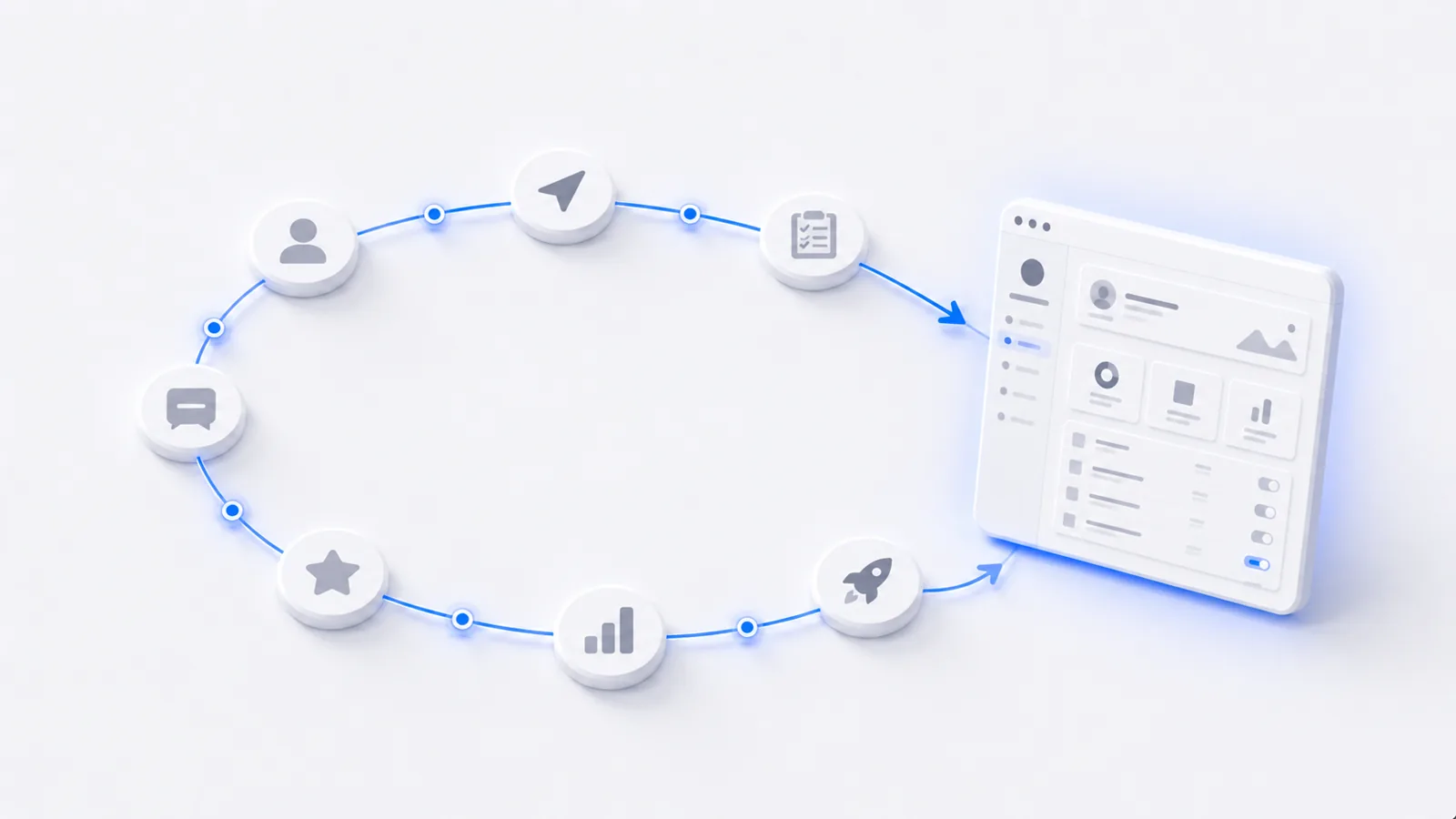
The customer onboarding process is the repeatable path that takes a new account from signed contract to real, repeated value. A good one has clear stages, an owner for each, and an exit criterion so you always know whether an account is on track or stalled. The stage that matters most is the first value milestone — the point where the customer achieves a genuine outcome, which predicts whether they renew. Here's a framework you can run every account through, and how to scale it without hiring for each new customer.
Stage 1 — Kickoff and goals
Onboarding starts with alignment, not setup. In the kickoff, confirm: what outcome does this customer need to consider the purchase a success, by when, and who on their side owns it? Write it down. Every later stage is judged against this goal. Exit criterion: a shared, written success goal and a named champion.
Stage 2 — Setup and configuration
The technical work: provisioning, integrations, data import, permissions. This is where momentum dies if it drags, so minimize it — defer anything not required to reach the first milestone, and handle the heavy lifting for the customer where you can. Exit criterion: the customer can log in and do the core action with their own data.
Stage 3 — Train the team
A single trained admin isn't adoption. The team that will actually use the product daily needs to learn it — and live training calls don't scale and get forgotten. This is where standardized, on-demand training earns its place:
Interactive walkthroughs let every new user on the account learn by doing, on their own schedule, without booking your team's time. (For building the training library, see how to create training videos for software.)
Stage 4 — First value milestone
The pivotal stage: the customer achieves a real outcome — the report that saved a meeting, the workflow that replaced a spreadsheet. This is the moment that predicts renewal, so engineer the whole process to reach it fast. Exit criterion: the customer has hit the success goal set in Stage 1, at least once.
If an account stalls, it's almost always before the first value milestone. Track time-to-first-value per account and intervene on anyone trending slow — that's where churn is decided.
Stage 5 — Transition to ongoing adoption
Onboarding ends with a deliberate handoff to ongoing success: a recap of what was achieved, the next goals, and where to get help in context. A clean transition turns a successfully onboarded customer into an adopting, expanding one. Exit criterion: the customer knows their next goal and how to self-serve help.
How to scale it
The framework is what makes onboarding scalable — standardize the repeatable parts (kickoff templates, a training library, exit criteria) and automate the self-serve parts (interactive walkthroughs instead of live training), so human time goes only to your highest-value accounts. Consistent outcomes, no linear headcount cost.
This account-level process sits on top of individual user onboarding best practices — get each user to value in their first session, and run the whole account against the SaaS onboarding checklist.
Frequently asked questions
What is the customer onboarding process?
Customer onboarding is the structured process of taking a new customer from the moment they sign or sign up to the moment they're getting real, repeated value from your product. It typically spans a kickoff, setup and data import, training the team, reaching a first success milestone, and handing off to ongoing adoption. Unlike user onboarding (one person's first session), customer onboarding covers the whole account.
What are the stages of customer onboarding?
A common framework: kickoff and goal-setting, technical setup and configuration, team training, first value milestone (the customer achieves a real outcome), and transition to ongoing success. Each stage has a clear exit criterion, so you always know whether an account is on track or stalled. The first value milestone is the stage that most predicts retention.
How do you scale customer onboarding?
Standardize the repeatable parts and automate the self-serve parts so human time goes only where it adds value. Replace live training sessions with interactive walkthroughs the customer's team can take anytime, use templates for kickoffs and plans, and reserve high-touch, white-glove onboarding for your highest-value accounts. The goal is consistent outcomes without a linear headcount cost.
What's the difference between customer onboarding and user onboarding?
User onboarding is about getting one individual to value in their first session inside the product. Customer onboarding is broader — it's the account-level process of getting an entire organization set up, trained, and achieving outcomes, often guided by a customer success or implementation team. A single customer onboarding includes many individual user onboardings.