
The SaaS Onboarding Checklist (From Signup to Activated)
A stage-by-stage SaaS onboarding checklist — what to do before signup, in the first session, and through the first week to get users activated instead of churned. Copy it and check each item against your flow.
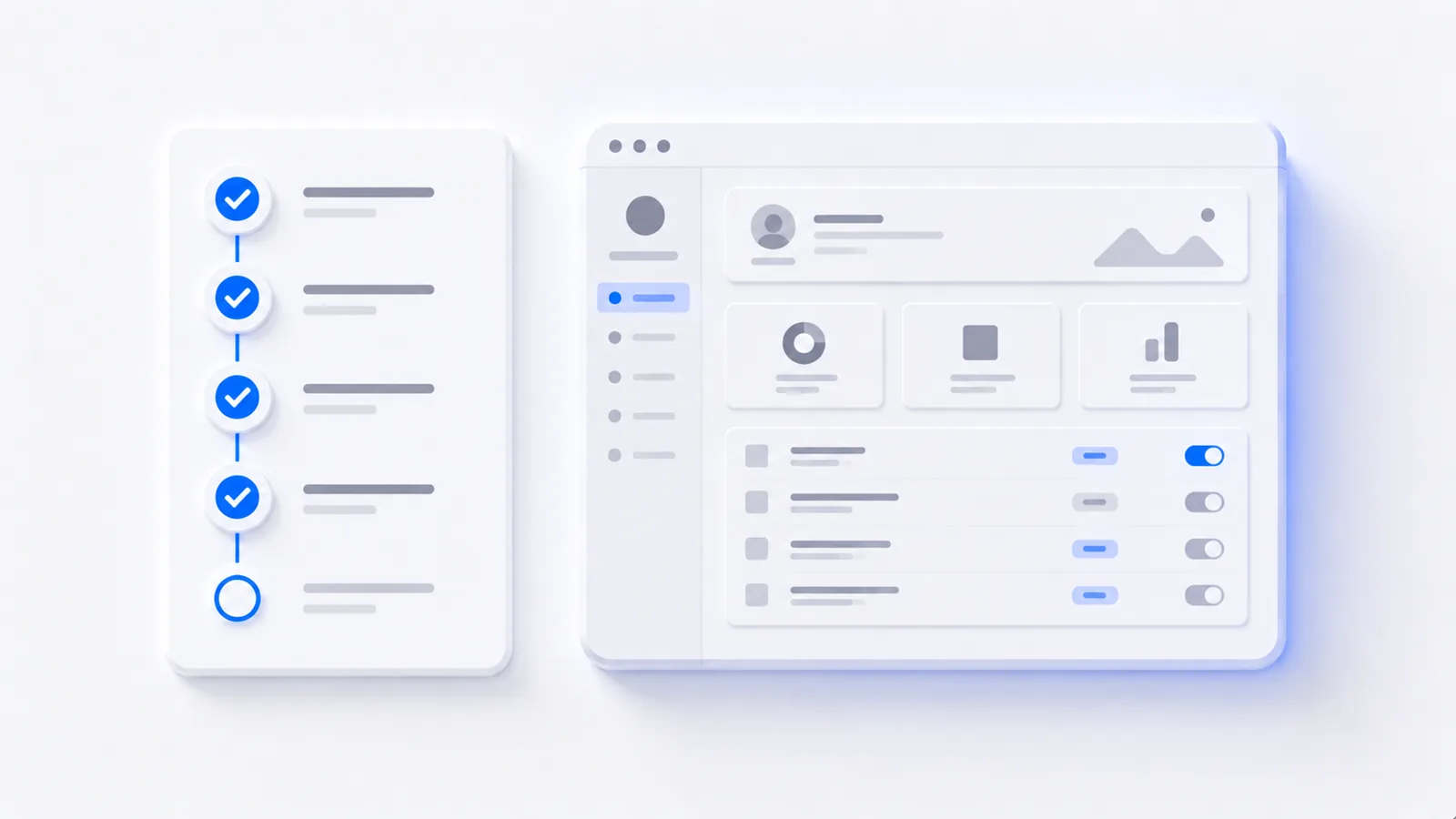
A SaaS onboarding checklist works best organized by stage, not by feature. The goal of every stage is the same — move the user closer to value and remove anything that doesn't. Below is a checklist you can run your own flow against, grouped into pre-signup, first session, activation, and week one. The single most important item is getting to the activation moment fast; everything else supports that. (For the reasoning behind these, see user onboarding best practices.)
Stage 0 — Before signup
Onboarding starts before the account exists. Set the right expectation so the people who sign up are the ones who'll succeed.
- The landing page shows the product doing its job (a demo or short clip), not just a feature list.
- The signup form asks for the minimum — every extra field costs you users.
- The promised value matches what the first session actually delivers.
Stage 1 — First session: get to value fast
This is where most onboarding leaks. The user is curious but not yet committed, and every wall loses some of them.
- The first screen offers one obvious next action, not an empty dashboard.
- Value comes before setup — show the payoff with sample data, then ask them to configure.
- A guided walkthrough carries them through the core action hands-on.
- Setup steps (invite team, connect data, preferences) are deferred until after the first win.
The fastest activation lift is usually subtraction: remove a form field, skip a settings screen, replace an empty state with a guided first action.
Stage 2 — Activation: the moment that predicts retention
Define your activation moment — the specific action that reliably predicts a user will stay (published a project, connected a data source, sent a first message). Then make the whole first session point at it.
- The activation moment is named and measured, not vague.
- The user reaches it in the first session, ideally the first few minutes.
- The action is something the user does, not something they read.
A guided interactive walkthrough is the most reliable way to get a brand-new user to that action without a support rep in the loop:
Stage 3 — Week one: build the habit
Activation is the start, not the finish. The first week decides whether it becomes a habit.
- A lifecycle email or in-app nudge brings them back to a second valuable action.
- Progress is visible — a checklist, a setup bar, or a clear "what's next."
- You reach out (automated or human) to anyone who activated but didn't return.
- Help is available in context, not buried in a separate docs site.
How to use this checklist
Run your live flow against every box above and mark where it fails. The failures cluster — most teams find their biggest leak between "signed up" and "reached value," which is exactly Stages 1 and 2. Fix those first; they move activation rate the most.
The guided-walkthrough items keep recurring here for a reason: a self-serve interactive demo is the cheapest way to deliver hands-on guidance at scale. To build one, see how to make a clickable product demo.
Frequently asked questions
What should a SaaS onboarding checklist include?
It should cover four stages: pre-signup (set the right expectation), first session (get to the first value moment fast), activation (the user completes the core action that predicts retention), and week one (build the habit). Each stage has a clear goal, and every item earns its place by getting the user closer to value — not by explaining more features.
What is the most important step in SaaS onboarding?
Getting the user to their activation moment — the specific action that reliably predicts they'll stick around — as fast as possible. Everything before it should be stripped down to remove friction, and everything after it builds on the momentum of that first win. If you optimize one thing, optimize time-to-first-value.
How do you measure SaaS onboarding success?
Track activation rate (the percentage of new users who reach the value milestone) and time-to-value (how long it takes them), not just signup or login counts. A high signup number with a low activation rate means your onboarding is leaking users between 'created an account' and 'got value' — which is exactly where this checklist focuses.
Should onboarding be self-serve or guided?
Both, layered. Self-serve guided walkthroughs — where the user does the real action with light guidance — scale without a rep and double as the activation event. Reserve human, high-touch onboarding for higher-value accounts where the relationship justifies the cost. An interactive demo is the most common way to deliver the self-serve guided layer.